
The Silver Mask
"But such an old woman like me, where’s the risk?”
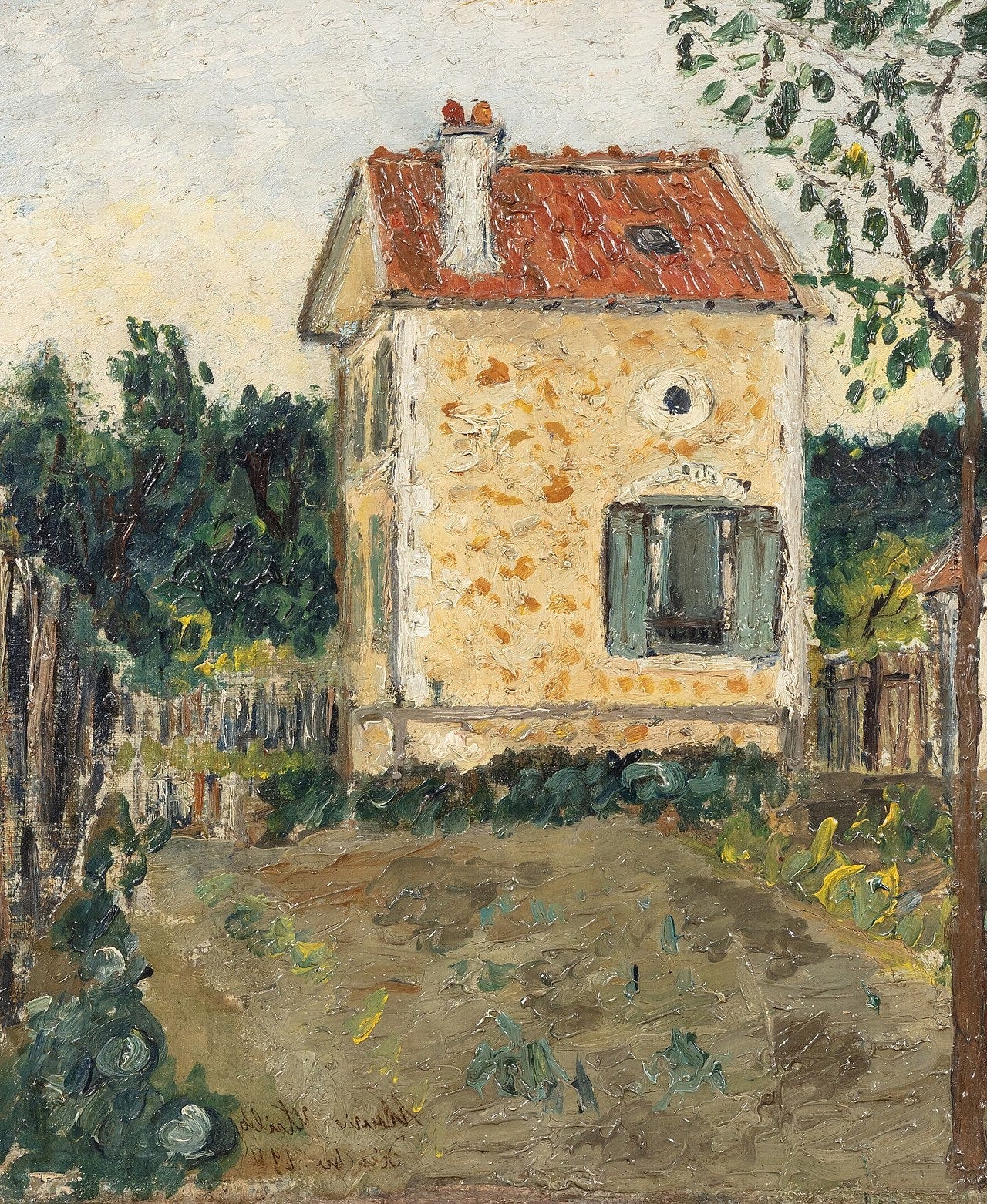
Miss Sonia Harris, coming home from a dinner-party at the Westons’, heard a voice at her elbow. “If you please, only a moment” She was only a few steps from her door. But it was late, there was no one about and the King’s Road1 rattle was muffled and dim.
“I am afraid I can’t…’” she began. It was cold and the wind nipped her cheeks. Then she turned and saw one of the handsomest young men possible. He was the handsome young man of all romantic stories - and he was wearing a shabby blue suit and shivering with the cold just as he should have been.
“Oh, I know,” he interrupted quickly. “Everyone says the same and quite naturally. I should if our positions were reversed. But I can’t go back to my wife and baby with nothing. We have no fire, no food, nothing except the ceiling we are under. It is my fault, all of it. I don’t want your pity, but I have to attack your comfort.”
He trembled. He shivered as though he were going to fall. Involuntarily she put out her hand to steady him. She touched his arm and felt it quiver under the thin sleeve.
“It’s all right . . .” he murmured. “I’m hungry . . . I can’t help it.”
She had had an excellent dinner. She had drunk perhaps just enough to lead to recklessness. In any case, before she realised it, she was ushering him in, through her dark-blue painted door. A crazy thing to do! Although intelligent she suffered dreadfully from impulsive kindness. All her life she had done so. The mistakes that she had made, and there had been quite a few, had all arisen from the triumph of her heart over her brain. When she reached her fiftieth birthday she said to herself, ‘well, now at last I’m too old to be foolish anymore.’ And yet here she was, helping an entirely unknown young man into her house at dead of night, and he in all probability the worst sort of criminal.
Very soon he was sitting on her rose-coloured sofa, eating sandwiches and drinking a whisky & soda. He seemed to be entirely overcome by the beauty of her possessions. But he had taste and he had knowledge. He knew that the Utrillo was an early one, he knew that the two old men talking under a window belonged to Sickert’s ‘Middle Italian,’ and he recognised the Dobson head.
“Are you are an artist?” she said.
“No, I am a pimp, a thief, a what you like - anything bad,” he answered fiercely. “And now I must go,” he added, springing up from the sofa.
He seemed most certainly invigorated. She could scarcely believe that he was the same young man who only half an hour before had had to lean on her arm for support. And he was a gentleman. Of that there could be no sort of question. And he was astoundingly beautiful in the spirit of a hundred years ago, like a young Byron.
Well, it was better that he should go, and she did hope (for his own sake rather than hers) that he would not demand money and threaten a scene. He had not apparently the slightest intention of threatening her. He moved towards the door. She realised that she had asked him nothing about his troubles, about his poor wife and baby, about his past history. It was better perhaps like this.
“Oh!” he murmured with a little gasp of wonder. He had stopped before one of the loveliest things that she had. It was a mask in silver of a clown’s face, the clown smiling, gay, joyful, not hinting at perpetual sadness as all clowns are traditionally supposed to do. It was one of the most successful efforts of the famous Sorat, greatest living master of Masks.
“Yes. Isn’t that lovely?” she said. “It was one of Sorat’s earliest things, and still, I think, one of his best.”
“You have saved my life,” he said to her in the hall.
“Well,” she answered cheerfully, “I was a fool to risk a strange man in my house at this time of night - or so my friends would tell me. But such an old woman like me, where’s the risk?”
“I could have cut your throat,” he said quite seriously.
“So you could,” she admitted. “But with horrid consequences to yourself.”
“Oh no,” he said. “Not in these days. The police are never able to catch anybody.”
“Well, good night. Do take this,” she gave him a pound. “It can get you some warmth at least.”
He took the pound. “Thanks,” he said carelessly. Then at the door he remarked, “That mask. The loveliest thing I ever saw.”
When the door had closed and she went back into the sitting-room she sighed: ‘What a good-looking young man!’ Then she saw that her beautiful white jade cigarette case was gone. It had been lying on the little table by the sofa. He had stolen it. She looked everywhere. No, undoubtedly, he had stolen it.
Sonia Harris was a woman of her time in that outwardly she was cynical and destructive, while inwardly she was a creature longing for affection and appreciation. Although she was in her sixties she was active, could do with little sleep and less food, could dance and drink cocktails, and play bridge late into the night. Inwardly she cared for neither cocktails nor bridge. But, beyond everything else, she was maternal.
Twice at least she would have married, but the man she had loved had not loved her (that was twenty-five years ago), so she had pretended to despise matrimony. Had she had a child her nature would have been fulfilled; as she had not had that good fortune, she had been maternal (with outward cynical indifference) to a number of people who had made use of her, sometimes laughed at her, never deeply cared for her.
She was named ‘a jolly good sort,’ and was always ‘just outside’ the real life of her friends. Her Harris relations, the Rockages and Smiths and Newmarks, used her to take odd places at table, to fill up spare rooms at house-parties, to make purchases for them in London, to talk to when things went wrong with them or people abused them. She was a very lonely woman.
And she had a weak heart, not only a spiritual weak heart but also a physical one. When she suffered, she must take her drops, lie down and rest. Like all the other women of her period and manner of life she had a courage worthy of a better cause.
She saw her young thief for the second time a fortnight later. She saw him because he came to her house one evening, when she was dressing for a dinner party she was hosting. “A young man at the door,” said her maid Rose. “He won’t give his name.”
She came down and found him in the hall, the cigarette case in his hand. He was wearing a decent suit of clothes, but he still looked hungry, haggard, desperate and incredibly handsome. She took him into the room where they had been before. He gave her the cigarette case. “I pawned it,” he said, his eyes on the silver mask.
“What a disgraceful thing to do!” she said. ‘‘Do you never do any work?”
“I paint,” he answered. “But no one will touch my pictures. They are not modern enough. I have some here, won’t you buy one?”
“They are very bad,” she answered. “I should have to hide it.” She was aware that in ten minutes her guests would be here.
“I know” he said. “That one with the cows is not so bad.”
She sat down and wrote a cheque. “I’m a perfect fool. Take this and understand I never want to see you again. Never! You will never be admitted. It is no use speaking to me in the street. If you bother me I shall tell the police.” He took the cheque with quiet satisfaction, held out his hand and pressed hers a little.
All that evening while she listened to the hard and crackling ironies of her friends, she thought of the young man. She did not know his name. The only thing that she knew about him was that by his own confession he was a scoundrel and had at his mercy a poor young wife and a starving child.
The picture that she formed of these three haunted her. It had been, in a way, honest of him to return the cigarette case. Ah, but he knew, of course, that did he not return it he could never have seen her again.
Then, as unexpectedly as on the other occasions, he appeared again. One night as she, back from a theatre, was preparing to climb the stairs to bed, there was a knock on the door. Rose had gone to bed so she went herself to the door. There he was, and with him a young girl and a baby. They all came into the sitting-room and stood awkwardly by the fire.
It was at that moment when she saw them in a group by the fire that she felt her first sharp pang of fear. She knew suddenly how weak she was. She seemed to be turned to water at sight of them. She, Sonia Harris, sixty six years of age, independent and strong, save for that little flutter of the heart! She was afraid as though someone had whispered a warning in her ear.
The girl was striking, with red hair and a white face, a thin graceful little thing. The baby, wrapped in a shawl, was fast asleep. She gave them drinks and the remainder of the sandwiches that had been put there for herself. The young man looked at her with his charming smile.
“I haven’t come to cadge anything this time,” he said. “But I wanted you to see my wife and I wanted her to see some of your lovely things.”
“Well,” she said sharply. “You can only stay a minute or two. It’s late. I’m off to bed. Besides, I told you not to come here again. By the way, you’ve never told me your name.”
“Henry Abbott, and that’s Ada, and the baby’s called Henry too.”
Then he fell into silence, and the girl never said a word. After an intolerable pause Sonia Harris suggested that they should go. They didn’t move. Half an hour later she insisted. They got up. But, standing by the door, Henry Abbott jerked his head towards the writing-desk.
“Who writes your letters for you?”
“Nobody. I write them myself.”
“You ought to have somebody. Save a lot of trouble. I’ll do them for you. And you needn’t pay me anything either. It will fill up my time.”
“Nonsense . . . good night, good night.” She closed the door on them. She could not sleep. She lay there thinking of him. She was moved, partly by a maternal tenderness for them that warmed her body (the girl and the baby had looked so helpless sitting there), partly by a shiver of apprehension that chilled her veins. Well, she hoped that she would never see them again.
Three mornings later he arrived. It was a wet morning, and she had decided to devote it to the settling of accounts. She was sitting there at her table when Rose showed him in.
“I’ve come to do your letters,” he said.
“I should think not,” she said sharply. “Now, Henry Abbott, out you go. I’ve had enough…”
“Oh no, you haven’t,” he said, and sat down at her desk.
She would be ashamed for ever, but half an hour later she was seated in the corner of the sofa telling him what to write. She hated to confess it to herself, but she liked to see him sitting there. He was company for her, and to whatever depths he might by now have sunk, he was most certainly a gentleman. He behaved very well that morning; he wrote an excellent hand. He seemed to know just what to say.
For three weeks he behaved very well, arriving punctually, offering her no insults, doing as she suggested about everything. In the fourth week, about a quarter to one on a day, his wife arrived. The young man already knew that Miss Harris was lunching alone. It seemed to be very difficult not to ask them to remain. She did, although she did not wish to. The meal was not a success. The two of them together were tiresome, for the man said little when his wife was there, and the woman said nothing at all. Also, the pair of them were in a way sinister.
She sent them away after luncheon. They departed without protest. But she decided that she must rid herself of them, once and for all. It was true that it had been rather agreeable having him there. But what alarmed her, was that during all these weeks he had made no request for money, made indeed no request for anything.
That evening they appeared again, husband, wife and baby. Sonia had settled herself down for a cosy evening with a book and an ‘early to bed.’ There came the knock on the door. On this occasion she was most certainly firm with them. When they were gathered in a little group in the hall, she addressed them.
“Here is five pounds,” she said, “and this is the end. If one of you shows his or her face inside this door again, I call the police. Now go.”
The girl gave a little gasp and fell in a dead faint at her feet. It was a perfectly genuine faint. Rose was summoned. Everything possible was done.
“She has simply not had enough to eat,” said Henry Abbott. In the end (so determined and resolved was the faint) Ada Abbott was put to bed in the spare room and a doctor was summoned. After examining her he said that she needed rest and nourishment.
This was perhaps the critical moment of the whole affair. Had Sonia Harris been properly resolute she would have bundled the Abbott family, faint and all, into the cold street. It was, however, just here that her maternal temperament was too strong for her.
The poor young thing lay exhausted, her eyes closed, her cheeks almost the colour of her pillow. The baby (surely the quietest baby ever known) lay in a cot beside the bed. Henry Abbott wrote letters to dictation downstairs. Once Sonia Harris, glancing up at the silver mask, was struck by the grin on the clown’s face. It seemed to her now a thin sharp grin - almost derisive.
Three days after Ada Abbott’s collapse there arrived her aunt and her uncle, Mr. and Mrs. Edwards. Mr. Edwards was a large red-faced man with a hearty manner and a bright waistcoat. He looked like a publican. Mrs. Edwards was a thin sharp-nosed woman with a bass voice. They sat side by side on the sofa and explained that they had come to enquire after Ada, their favourite niece. Mrs. Edwards cried, Mr. Edwards was friendly and familiar.
Unfortunately, Mrs. Weston and a friend came and called just then. They did not stay very long. They were frankly amazed at the Edwards couple and deeply startled by Henry Abbott’s familiarity. Sonia Harris could see that they drew the very worst conclusions.
A week later Ada Abbott was still in bed in the upstairs room. It seemed to be impossible to move her. The Edwardses were constant visitors. They all crowded into the spare bedroom and gazed at the pale figure eyes sympathetically.
Then two things happened together. Rose gave notice and Mrs. Weston came and had a frank talk with her friend. She began with that most sinister opening, “I think you ought to know, dear, what everyone is saying…” What everyone was saying was that Sonia Harris was living with a young ruffian from the streets, young enough to be her son.
“You must get rid of them all and at once,” said Mrs. Weston, “or you won’t have a friend left in London, darling.”
Left to herself, Sonia Harris did what she had not done for years, she burst into tears. What had happened to her? Not only had her will and determination gone but she felt most unwell. Her heart was bad again. She could not sleep. There was dust over everything. How was she ever to replace Rose? She was living in some horrible nightmare. This dreadful handsome young man seemed to have some authority over her. Yet he did not threaten her. All he did was to smile. Nor was she in the very least bit in love with him. This must come to an end, or she would be lost.
Two days later, at tea-time, her opportunity arrived. Mr. and Mrs. Edwards had called to see how Ada was. Ada was downstairs at last, very weak and pale. Henry Abbott was there, also the baby. Sonia Harris, although she was feeling dreadfully unwell, addressed them all with vigour.
“You must understand,” she said. “I don’t want to be unkind, but I have my own life to consider. I am a very busy woman, and this has all been forced on me. I don’t want to seem brutal. I’m glad to have been of some assistance to you, but I think Mrs. Abbott is well enough to go home now - and I wish you all good night.”
“I am sure,” said Mrs. Edwards, looking up at her from the sofa, “that you’ve been kindness itself, Miss Harris. Ada recognises it, I’m sure. But to move her now would be to kill her, that’s all. Any movement and she’ll drop at your feet.”
“We have nowhere to go,” said Henry Abbott.
“Oh, but this is monstrous!” Sonia Harris cried. “I have had enough of this. I have been generous to a degree…”
“What about my pay,” said Henry, “for all these weeks?”
“Pay! Why, of course..” Miss Harris began. Then she stopped. She realised several things. She realised that she was alone in the house, the cook having departed that afternoon. She realised that none of them had moved. She realised that her ‘things’ — the Sickert, the Utrillo, the sofa - were alive with apprehension. She was fearfully frightened of their silence, their immobility. She moved towards her desk, and her heart turned, squeezed itself dry, and the most dreadful agony shot through her body.
“Please,” she gasped. “In the drawer, the little green bottle, oh, quick! Please, please!”
The last thing of which she was aware was the quiet handsome features of Henry Abbott bending over her.
When, a week later, Mrs. Weston called, the girl, Ada Abbott, opened the door to her.
“I came to enquire for Miss Harris,” she said. “I haven’t seen her about. I have telephoned several times and received no answer.”
“Miss Harris is very ill.”
“Oh, I’m so sorry. Can I not see her?”
Ada Abbott’s quiet gentle tones were reassuring her. “The doctor does not wish her to see anyone at present. May I have your address? I will let you know as soon as she is well enough.”
Mrs. Weston went away. She recounted the event. “Poor Sonia, she’s pretty bad. They seem to be looking after her. As soon as she’s better we’ll go and see her.” London life moves swiftly. Sonia Harris had never been of very great importance to anyone. Harris relations enquired. They received a very polite note assuring them that so soon as she was better, she would be in touch.
Sonia Harris was in bed, but not in her own room. She was in the little attic bedroom but lately occupied by Rose the maid. She lay at first in a strange apathy. She was ill. She slept and woke and slept again. Ada Abbott, sometimes Mrs. Edwards, sometimes a woman she did not know, attended to her. They were all very kind. Did she need a doctor? No, of course she did not need a doctor, they assured her. They would see that she had everything that she wanted.
Then life began to flow back into her. Why was she in this room? Where were her friends? What was this horrible food that they were bringing her? What were they doing here, these women?
She had a terrible scene with Ada Abbott. She tried to get out of bed. The girl restrained her - easily, for all the strength seemed to have gone from her bones. She protested, she was as furious as her weakness allowed her, then she cried. Next day she was alone and she crawled out of bed. The door was locked, she beat on it. There was no sound but her beating. Her heart was beginning again that terrible strangled throb. She crept back into bed.
She lay there, weakly, feebly crying. When Ada arrived with some bread, some soup, some water, she demanded that the door should be unlocked, that she should get up, have her bath, come downstairs to her own room.
“You are not well enough,” Ada said gently. “Please don’t get excited. It is so bad for your heart.”
Summer had come. Mrs. Weston went to Etretat. Everyone was out of town. No one had time to enquire. There were so many things to do. Sonia was a good sort, but she had been nobody’s business.
The first rains of autumn lashed the streets. In the sitting-room the gramophone was turned on. Ada and some friends were dancing. All the furniture was flung against the walls. Mr. Edwards drank his beer, Mrs. Edwards was toasting her toes before the fire. Henry Abbott came in. He had just sold the Utrillo. His arrival was greeted with cheers.
Then he took the silver mask from the wall and went upstairs. He climbed to the top of the house, entered, switched on the naked light.
“Oh! Who? What?” A voice of terror came from the bed.
“It’s all right,” he said soothingly. “Ada will be bringing your tea in a minute.”
He had a hammer and nail and hung the silver mask on the speckled, mottled wall-paper where Miss Harris could see it. “I know you’re fond of it,” he said. “I thought you’d like it to look at.”
She made no reply. She only stared.
“You’ll want something to look at,” he went on. “You’re too ill I’m afraid, ever to leave this room again. So it’ll be nice for you. Something to look at.”
He went out, gently closing the door behind him.
This story was written by Hugh Wagpole. It was originally published in 1930, then revised and updated by K.J. Wilsdon in 2026.
Hugh Wagpole wrote this short story and a novel ‘The Old Ladies’, both of which highlight the societal neglect of defenceless, older women. Although the old ladies in his novel are poor, and Miss Harris in this story is rich, he describes their slow, desperate descent in excruciating detail. The Silver Mask was written over 100 years ago, but as an older widow myself, I found it a stark and frightening reminder of how vulnerable any of us can be.
Or, if you know someone who likes reading short stories,
please let them know about this publication.
This King’s Road is a shopping area in central London, UK. Housing around this area was and is very expensive.
Oh my gosh, what a story! Shudder...